Tech news and more ....

Business and Technology area.


Showing posts with label Google. Show all posts

Thursday, March 30, 2017

#Google encourages developers to adjust their apps for tall phones


 There’s an emerging trend in the world of premium Android phones for devices with taller-than-usual screens. Both Samsung’s Galaxy S8 / S8 Plus and LG’s G6 have gotten on board with this, offering displays with aspect ratios of 18.5:9 and 18:9, respectively. But taller (or wider) screens can be a problem when using apps built for the more common 16:9 ratio, leading to unsightly bars at the top and the bottom of the display.
To combat this, Google is encouraging Android developers to adapt their apps to the new ratio. In a post on the company’s blog, developer advocate Neto Marin talks programmer through the tweaks needed to “take full advantage of the larger display formats.” It seems pretty simple to make the change, and the results are obviously worth it:
Before and after an app has been updated to work with taller aspect ratios.
 Image: Google
The question is, will these new, taller screens (and their taller apps) be sticking around?
They’re a good way of creating more screen real estate without making phones unmanageably wide, but they could also make devices more prone to breakage. And while taller screens are wider screens which makes them good for watching movies, how many people regularly watch movies on their phones? Basically, we’ll have to wait and see how things shake out with these new, taller screens, but at least Google is encouraging developers to make the best of the situation.
Theverge.com

Bookmark and Share

Genesis mining promo code: CZL5k6
Email ThisBlogThis!Share to XShare to FacebookShare to Pinterest
Етикети: Google

Monday, March 13, 2017

#Google 's Invisible #CAPTCHA Doesn't Need To Ask if You're a Bot


 Search giant Google is aiming to make the process of proving that you're a human a little less annoying with a new version of its reCAPTCHA technology. The announcement is part of the flood of news coming out of this week's Google Next '17 conference in San Francisco.

The new technology will be completely invisible to the end user, allowing Web sites to verify that someone is not a robot without forcing them to try to decipher distorted images of text, according to Google.

Marketing the new version of the reCAPTCHA service as "tough on bots, easy on humans," the company isn't offering up any details on how exactly the security system works. All that Google will say is that the update relies on machine learning and advanced risk analysis to make informed decisions about who's human and who's a bot.

Pre-Screened Humans

The reCAPTCHA system is a security safeguard used by Web sites to weed out malicious bots from human users. The platform was acquired by Google in 2009, and is now the most widely used provider of CAPTCHA verification technology in the world, according to Google.

CAPTCHA involves asking users to perform a series of visual-perception tasks, such as reading distorted text, to prove they're real. But the procedure can prove frustrating for users, such as when they appear in the middle of financial transactions, or if users are visually impaired.

Google said the latest version of the technology is an improvement over previous versions of the verification system, in which users had to verify they were not bots by clicking on checkboxes. Now, however, reCAPTCHA will only subject users exhibiting suspicious activity to additional security challenges.

Резултат с изображение за google captcha

No More Blurry Images

"Since the launch of No CAPTCHA reCAPTCHA, millions of Internet users have been able to attest they are human with just a single click," the company wrote on the reCAPTCHA Web site. "Now we're taking it a step further and making it invisible. Human users will be let through without seeing the 'I'm not a robot' checkbox, while suspicious ones and bots still have to solve the challenges."

According to Google, the system uses a broad range of cues to distinguish humans from bots, although the company didn't say what sort of behavior it considered suspicious. Potentially, anyone using a Tor browser or VPN to access Web sites could be interpreted as suspicious.

But Google said thanks to Invisible reCAPTCHA, a "significant portion" of valid human users will now be verified without ever having to perform any of the usual verification tasks. If it works as advertised, the new widget should prove a huge relief to users tired of having to identify storefronts in blurry images.


Genesis mining promo code: CZL5k6
Email ThisBlogThis!Share to XShare to FacebookShare to Pinterest
Етикети: Google

Thursday, January 26, 2017

#Google opens up its #Daydream VR platform to all developers


After a couple months of restricting development on Daydream, Google has opened the floodgates, now allowing anyone to submit an app or experience for the company’s mobile VR platform.

Previously, the company had worked with a select group of partners to build out apps for the platform, assumedly to give developers interested in Daydream a taste of what works well on it.
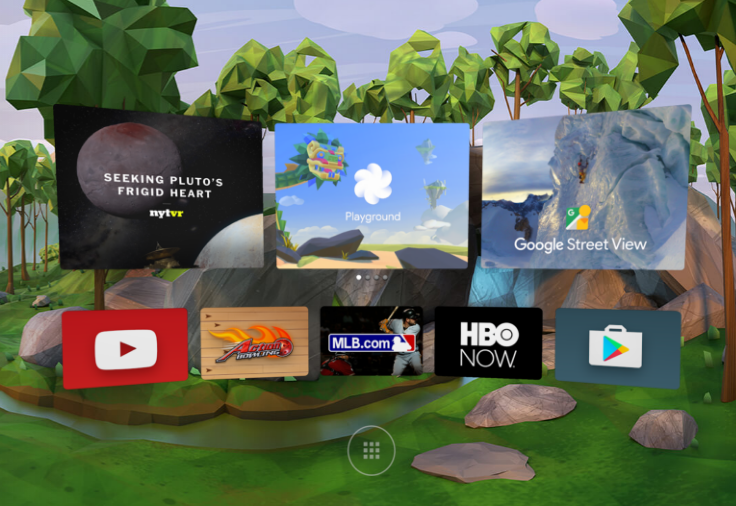


Apps and games from Jaunt, Within, Lucid Sight and others were first to make the store, now Google is ready to share some key requirements and let the devs go wild with Daydream. The majority of these stipulations focus on user comfort, ensuring that users are the ones directing the camera and that the horizon line stays stable during experiences.

Daydream is currently only available on a few phones (the Google Pixel and Pixel XL are the most notable), but more and more handsets are gaining the Daydream certification that opens up users of the handsets to high-quality, low-latency VR on a mobile device. With this news from Google, there are sure to be quite a bit more apps invading the store that will give the first crop of Daydream users a lot to test out.


Competing platforms like Samsung’s Gear VR already have had more than a year to build out mobile VR content but given the reach of the Google Play store and the breadth of compatible devices that are promised, it wouldn’t be surprising to see Google catch up rather quickly in terms of available titles.

Techcrunch.com


Genesis mining promo code: CZL5k6


Email ThisBlogThis!Share to XShare to FacebookShare to Pinterest
Етикети: daydream, Google

Wednesday, December 21, 2016

#Google sued by employee for confidentiality policies that 'muzzle' staff


 A product manager at Google has sued the company over its allegedly illegal confidentiality rules, which, among other things, prohibit employees from speaking even internally about illegal conduct and dangerous product defects for fear that such statements may be used in lawsuits or sought by the government.


150817 google headquarters 3


 The alleged policies, which are said to violate California laws, restrict employees' right to speak, work or whistle-blow, and include restrictions on speaking to the government, attorneys or the press about wrongdoing at Google or even “speaking to spouse or friends about whether they think their boss could do a better job,” according to a complaint filed Tuesday in the Superior Court of California for the city and county of San Francisco.

 “The policies prohibit Googlers from using or disclosing all of the skills, knowledge, acquaintances, and overall experience at Google when working for a new employer," according to the complaint, which alleges that the company’s confidentiality policies are contrary to the California Labor Code, public policy and the interests of the state.

 Google’s Global Investigation Team “also relies on ‘volunteers’ to report other employees who might have disclosed any information” about the company, according to the complaint, which paints a picture that is in sharp contrast to the glowing image one usually gets about Google's workplace culture and perks.

 Under a program called Stopleaks, Google asks employees to report on “strange things” around them such as anyone asking detailed questions about an employee’s project or job, according to the complaint. Employees are also said to be banned from writing creative fiction such as “a novel about someone working at a tech company in Silicon Valley,” without Google’s approving the book idea and the final draft.

 The policies are said to be be intended to control Google’s former and current employees, limit competition, infringe on constitutional rights and block the reporting of misconduct. The complaint goes on to state that the case does not concern Google’s trade secrets, consumer privacy or information that should not be disclosed under the law, but reflects the company’s use of confidentiality and other policies for illegal and improper purposes.

 In the lawsuit, first reported by The Information, the employee who has filed anonymously as John Doe, claims that Brian Katz, Google’s director of global investigations, intelligence and protective services, had falsely informed some 65,000 Google employees that the plaintiff was terminated for leaking information to the press, without naming him. Katz and Google used him as scapegoat to ensure that other employees continued to fall in line with the company’s confidentiality polices, according to the complaint, which asks that the employee should not be asked “to self-publish” his name.

 Google could not be immediately reached for comment on the lawsuit after business hours. The company was quoted by some news outlets as saying in a statement that its "employee confidentiality requirements are designed to protect proprietary business information, while not preventing employees from disclosing information about terms and conditions of employment, or workplace concerns."

 In September, the employee had complained to the Labor Workforce and Development Agency, after which Google made an amendment in which it “purported to broaden Googler’s right to discuss pay, hours or other terms of employment and to communicate with government agencies regarding violations of the law,” according to the complaint.

 Employees were not informed of the amendment and other policies were not changed, and “in fact, Google’s actual policies and practices remained unchanged,” it added.

 The employee has asked the California court for penalties for each of the 12 alleged violations under the Private Attorneys General Act on behalf of himself, the state of California and other Google employees.

Computerworld.com


Genesis mining promo code: CZL5k6
Email ThisBlogThis!Share to XShare to FacebookShare to Pinterest
Етикети: Google

Wednesday, June 8, 2016

June Android distribution: #Marshmallow at 10%, Lollipop at 35%

 It's that time of month again when Google gives developers and users a quick glimpse at the health of the Android market as far as version numbers go. And boy how the mighty have fallen! The combined might of the three Jelly Bean releases no longer has any hold, as it goes below a fifth of the market. Lollipop has taken over its throne, becoming the largest so far. Meanwhile, Marshmallow rises at a steady pace, now occupying 10% of the Android space.
For a long time, Android 4.1 to 4.3 reigned unchallenged, reaching heights in early 2014 when it nearly conquered three-fourths of the pie. Which isn't surprising considering we're talking about three Android releases lumped together. A year later, it would finally be dethroned by Android 4.4 "KitKat", though the latter's victory would be short lived, as Android 5.0 and 5.1 Lollipop would overtake it in just 8 months.
Now the Jelly Bean is near the end of its journey. Android 4.3 in particular, teeters close to the lower limit. It now stands at 2.7%, not that far from Android 2.3 Gingerbread's 2.0%. Any distribution that goes below 0.1% gets removed from the list. Amusingly enough, Android 2.2 Froyo still remains solidly in its place, which it has held for the past 6 months.
android-distribution-2016-06
Looking to the future, it would seem that Marshmallow's path is secure. But there's a catch. Android N is around the corner and it brings some features that are quite irresistible. There's split screen for one. But there are also other goodies like a more reasonable Doze mode and quicker system updates. It is possible that Marshmallow might reach its highest point in just a month or two. It's not exactly unheard of, as versions like Android 4.3 (Jelly Bean) and 5.0 (Lollipop) never reached the 20% that its other siblings enjoyed.
Given how many Marshmallow devices there are in the market now, and some are still getting their updates, it could yet be another messy phase as far as Android fragmentation is concerned.
SOURCE: Google

Bookmark and Share
Email ThisBlogThis!Share to XShare to FacebookShare to Pinterest
Етикети: Google, marshmallow

#Google tests a cleaner look for Search

 Google has begun to test a new Material Design layout for its desktop search results. The company introduced Material Design in 2014 at its annual I/O conference during its Android Lollipop unveil, promising to spread the new grid-based look across Android, Chrome OS and the web. It's... taken a while to get there, and arguably the most important of Google's web properties -- YouTube and Search - still haven't made the switch. Last month, Google began testing a fresh look for its video streaming site, and now, we're beginning to see that familiar grid of floating cards show up in google.com search results.
The change isn't exactly monumental: Google Search has always returned results in a grid, so the basic layout is functionally identical to the current one. The biggest change is a visual one: the background in the test is a light gray, and individual search results are boxed in white with a small drop shadow to imply elevation.
Another major change is to the informative modules that Google shows for certain terms. Typing "Run The Jewels," for example, would bring up a list of search results accompanied by a card displaying information on the musicians and upcoming events on the right. In the new layout, this card is shown inline, before the regular search results. Given this is just a limited test, there's every chance this behavior will change if Google makes the Material Design layout the default.
Small changes elsewhere include new iconography for the magnifying glass in the search box, and switching out the settings cog for the three vertically aligned dots. Both the changes will be familiar to Android users. The google.com homepage has also been modified in line with the new aesthetic.
The test seems to have begun fairly recently, and on a small scale: There have been a few mentions of the new layout on Twitter and Reddit over the past week, and it's only showing up in one Engadget editor's search results. The company frequently trials new features and layouts on a small group of its users, seemingly at random. Many of the changes never make their way out of the testing phase. We've reached out to Google to ascertain its plans for the new design.
Engadget.com
Bookmark and Share
Email ThisBlogThis!Share to XShare to FacebookShare to Pinterest
Етикети: Google

Thursday, January 28, 2016

Exclusive: Google’s New Head of Virtual Reality on What They’re Planning Next; #google

Cardboard is a hit, but what else is the search giant working on?

Clay Bavor wears a Google Cardboard headset in the google woodworking shop in googles hq in mountain view, CA on june 24, 2015.Google is well-known for its April Fools pranks. The first came in 2000 when the company’s search page suggested it could read users’ minds. (It couldn’t.) A few years later, Google told people it would deliver emails on old-fashioned paper through the post office. (It didn’t.) And then there was a 2007 plan to build a broadband network using sewage pipes called TiSP, or Toilet Internet Service Provider. (It’s not clear how many people dropped a fiber optic cable down their commode to try it out.)
So it was no surprise that when Google announced in June of 2014 that it had built a virtual reality headset almost entirely of cardboard, many people thought it was another of the company’s gags—if several months delayed. The project, dubbed Google Cardboard, has been anything but a joke. On Jan. 27, Google will announce that 5 million Cardboard have shipped. More importantly, the company says people are using them: 25 million Cardboard apps have been downloaded from its Play Store, meaning users have tried an average of five different experiences. The most popular app for the device is Chair in a Room, a surprisingly unsettling first-person horror game. But Cardboard apps range from rollercoaster simulators to field trips visits to well-known global monuments.
Cardboard may be the lowest-tech gadget in the history of modern consumer electronics. Its ingredients include about half a pizza box worth of cardboard, two magnets, a couple pieces of Velcro, two lenses and a single rubber band. Pop in a smartphone loaded with the right apps, and Cardboard becomes a virtual reality viewer. When you first see a Google Cardboard unit in person, it’s hard to believe it can do anything impressive. Then you put it on.
 In an era of blockbuster Kickstarter campaigns, major partnerships, and multi-billion-dollar acquisitions, Google’s recyclable virtual reality viewer may be the most popular “device” for the nascent technology. It would’ve been easy for Google to mark the win and forget about Cardboard as a stunt, if a highly impactful one. But Google has built on Cardboard’s success,adding new features to the device and accompanying software, like better audio. It has fostered a community of developers, crucial for getting fresh content and attracting new users. And it struck high-profile deals to give Cardboard viewers to more people, including one with The New York Times.
At least some of the credit for Cardboard’s early success belongs to Googler Clay Bavor, who recently marked his tenth anniversary with the Mountain View, Calif. firm. Bavor has been leading the Cardboard team since close to the beginning, while running the product and design teams responsible for some of Google’s most well-known software, like Gmail and Google Docs. Bavor describes Cardboard’s early difficulties, such as figuring how to interact with a smartphone that’s stuck inside a paper box. Smartphones have so-called magnetometers, which measure the strength and direction of magnetic fields. They’re meant to help phones figure out which direction they’re pointed in and make features like working compasses possible. So the team added metal magnets to Cardboard’s hardware, then created software to interpret shifts in their magnetic field as a user’s “click.”
“The interesting thing about Cardboard is, the smartphones weren’t built for VR,” says Bavor. “With the exception of a few, they were all designed and built before Cardboard existed. So there’s no thought about how you could optimize a smartphone to make it great not only as a smartphone, but also as the core of a VR device.”
Bavor says he’s been obsessed with the idea of making unreal things look realistic since he was a child. That led to interests in photorealism, computer modeling, and virtual reality. When Google recently decided to open a dedicated VR department, Bavor was a natural choice to run it. “I kind of became known inside Google as the VR nerd,” he tells TIME in his first interview since being named Google’s vice president of virtual reality earlier this month. “When David Coz, who was the engineer from the Paris office, showed up in Mountain View with the first Google Cardboard prototype it wasn’t long before someone said, ‘Clay needs to see this.'” That Google is putting resources into a new division, even as it seeks tostreamline its operations under a wider reorganization, shows the firm wants to take virtual reality—promising but unproven technology—seriously. (Google has also invested in augmented reality startup Magic Leap).
Still, Cardboard only offers an entry-level virtual reality experience. It’s likely the least-expensive gateway device to virtual reality. Forthcoming high-end virtual reality headsets from Oculus, Valve, Microsoft and Sony will cost anywhere from several hundred dollars to several thousand, depending on the computers needed to make them run. They will, for the price, offer much more immersive experiences. Samsung sells its Gear VR for $99, but it only works with that company’s line of phones. Worldwide sales of virtual reality gear are expected to rise to nearly $16 billion annually by 2020, estimates researcher Markets and Markets.
Time.com

Bookmark and Share
Email ThisBlogThis!Share to XShare to FacebookShare to Pinterest
Етикети: Google

Wednesday, December 9, 2015

#Google Pixel C With #Android 6.0 Marshmallow Now Available In US For $499


Google Pixel C
Power-packed Google Pixel C slate can now be purchased from Google Store at a starting price of $499. Google
Following the trend of humongous display clad 2-in-1 slates like the Apple iPad Pro and Microsoft Surface Pro, Google’s Pixel C also comes with a killer display. This tablet was introduced alongside the Nexus 6P and Nexus 5X smartphones. Now, the Pixel C can be purchased in the U.S.
The Google Pixel C runs on the latest Android 6.0 Marshmallow OS. The device offers premium-look thanks to the anodized aluminum build and it comes packed with cutting-edge configurations. The search giant is now selling this device via Google Play Store pertaining to the following countries -- the U.S., Australia, Austria, Belgium, Canada, France, Germany, Hong Kong, Ireland, Netherlands, New Zealand, Spain, Switzerland and the U.K.
Speaking of price, the 32 GB variant of the slate will set the buyers back by $499, whereas the 64 GB model can be availed for $599. In case, buyers would like to convert this slate into a laptop, Google is now selling the detachable/optional keyboard for $150.  
As far as the specifications go, the Google Pixel C features a killer 10.2-inch display, aided by 2,560 x 1,800 pixels screen resolution. To top it off, according to Phone Arena, the device comes with an aspect ratio of 1:√2, which is closer to the Microsoft Surface series’ 3:2 ratio. This metric clearly said the Pixel C is more of a laptop than a typical slate with an average ratio of 16:10.
Under the hood, the tablet comes powered by an Nvidia Tegra K1 chip. Not to forget, the Tegra K1 is reportedly world's first chipset guaranteed to give console-level performance for mobile devices. This chip also scored a phenomenal 75,000 points in AnTuTu benchmark test. Aiding the entire processor unit is a solid 3 GB of RAM configuration.
When it comes to memory specification, the device comes equipped with either 32 GB or 64 GB of built-in storage space. It goes without saying that being a Google device, the Pixel C will get all the major and minor software updates and security patches without fail. Similar to recently released devices, this slate also comes with an USB Type-C port.
Ibtimes.com
Bookmark and Share
Email ThisBlogThis!Share to XShare to FacebookShare to Pinterest
Етикети: Android, Google

Friday, August 28, 2015

Google confirms it will kill Flash advertising in Chrome on 1 September! #google, #flash, #html5

GOOGLE HAS DELIVERED what could be the killer blow for the much maligned Adobe Flash runtime that has been the cause of so many insecurities it probably qualifies for a course of CBT and some Prozac.
The company has announced that from 1 September it will turn Flash adverts into static images to protect against potential malicious code injections.
The move, first announced in June, has been trialled in the Beta Channel, and is rolling out to stable browser users from Tuesday.
Most of the web realises that HTML5 is the future, despite what Microsoft will tell you about Silverlight, a platform also not supported by Google, and calls have been mounting to kill off Flash once and for all.
As well as the security aspect, Flash slows down web rendering to an extent unacceptable to modern users. And it kills your battery as a result. And it's just awful. And did we mention the hacking?
Adobe has been on an active campaign to move people onto new alternatives like Adobe Air, but the simplicity and compatibility of HTML5 have made it a losing battle.
Firefox recently blocked Flash by default, and Chrome users will now actively have to choose to animate advertising content, which Chrome will "intelligently select", according to Google. Meanwhile, Amazon has banned Flash advertising for all adverts it hosts.
It will come as a nasty shock to advertisers, the vast majority of which are still using Flash.
Chrome doesn't actually use Adobe Flash, but rather renders using its own Pepper Flash plug-in, but it still doesn't seem to think that safety can be assured.
The option to kill Flash has always been there. Fiddle about under the bonnet of your browser and it has always been possible to deactivate it. But with Chrome and Chromium derivatives now taking up a large chunk of market share, this could be a huge sea change not just for the browser, but for internet advertising as a whole.
Mobile phones have been Flash free for a long time, and it doesn't seem to have done them any harm. Chrome for Android hasn't used Flash for several years, and in doing so has accelerated the decline of this relic of a bygone era.
Flash won't completely die for a while. There are still proprietary systems relying on it. But this one could be the stake in the heart we've been waiting for to make the internet just that little bit less of a crapshoot. But only a little.

Theinquirer.net

Bookmark and Share
Email ThisBlogThis!Share to XShare to FacebookShare to Pinterest
Етикети: flash, Google, html5

Tuesday, August 11, 2015

#Google creates company Alphabet, names new CEO


AN FRANCISCO — In a sweeping overhaul of how one of the world's most powerful technology companies operates, Google is creating a new publicly traded parent company called Alphabet Inc. to house all of its disparate businesses.

Alphabet will be run by Google co-founders Larry Page and Sergey Brin and Google will become a subsidiary of Alphabet with a new CEO: top Google executive Sundar Pichai.

"Our company is operating well today, but we think we can make it cleaner and more accountable," Page wrote in a letter included in a regulatory filing on Monday afternoon.

The news announced after the close of trading on Monday took Wall Street by surprise. Google GOOG shares rose 6% in after-hours trading.


Alphabet will be a conglomerate, or "collection" of companies, the largest of which is Google. But Google itself will be "slimmed down," excluding companies that are not part of its core Internet business.

Google will encompass the businesses that people typically associate with the brand, such as the Android and Chrome operating systems, YouTube and search.

What will fall outside the slimmer Google: newer, more experimental businesses such as the Internet of Things gadget maker Nest, the high-speed fiber-optic Internet project Fiber and Google's effort to extend human life with Calico.

There will also be two financial businesses: Google Ventures, the venture capital arm, and Capital, which invests in private equity deals. Google X, which is the company's experimental laboratory, will be run separately by Brin.

BERKSHIRE SIMILARITY

The structure is similar to Berkshire Hathaway, Warren Buffett's massive empire that has a portfolio of disparate businesses that specialize in everything from real estate to underwear. It also gives Page the opportunity to step back from the day-to-day drudgery and focus on the bigger picture. Page told the Financial Times last year that he aspired to be like Buffett, overseeing a group of semi-independent leaders building new businesses under the Google umbrella.

"Fundamentally, we believe this allows us more management scale, as we can run things independently that aren't very related," Page said.

Page has long sought to reinvigorate the entrepreneurial culture inside Google. He also has taken steps with the hiring of new Google Chief Financial Officer Ruth Porat to be more transparent with investors. And, bottom line: Page appears ready to turn his attention to the next wave of technologies that Google is exploring while leaving the online advertising business in the capable hands of Pichai.

Google spokeswoman Gina Scigliano declined to comment.

"I think this sets up Google to be a much more diversified company," said longtime Google observer Danny Sullivan, founding editor of MarketingLand.com. "It certainly allows Google to expand its mission. ... It's an excellent way to have multiple companies underneath that run as independent entities."


What's more, Google may be delivering on its promise of an era of greater transparency which was ushered in by Porat's appointment.

Investors have been increasingly rattled by Google's spending on its "moonshots," those experimental projects such as driverless cars and delivering Internet access from high-altitude balloons. Now Google will keep those speculative businesses separate from the core Internet advertising business.

"We will see Alphabet and we will see Google as a business line. We can do the math. That's good, more disclosure," said BGC Partners analyst Colin Gillis. "That will put to rest some of the concerns that Google is overspending in non-productive areas."

Google is also building a framework to give investors greater insight into its other businesses such as YouTube down the road, Gillis said.

But Pivotal Research Group analyst Brian Wieser cautioned that he's not sure investors will get much more transparency from the new structure.

"On balance, incremental transparency into Google’s business is positive, although we remain uncertain as to exactly how much transparency will be provided, and therefore remain cautious on the degree to which this news should be viewed favorably," Wieser wrote in a research note late Monday.

On the positive side of the ledger, Page is making room for talented executives to move up within Google, rather than leave, Sullivan said.

"It's a smart way to ensure that you can keep talented executives," he said.


NEW STRUCTURE

Page will be CEO of Alphabet, Brin will be president and Eric Schmidt will be executive chairman. Porat will become CFO of Alphabet and Google's current directors will become directors of Alphabet.

A "strong" CEO will run each of the Alphabet businesses with assistance from Page and Brin, Page said. That includes Google, which will be run by Pichai, Page's top lieutenant.

"We will rigorously handle capital allocation and work to make sure each business is executing well," Page said.

As part of the business reorganization, Alphabet will begin "segment" reporting for its fourth-quarter financial results. Google financials will be broken out from the rest of the Alphabet businesses.

"This new structure will allow us to keep tremendous focus on the extraordinary opportunities we have inside of Google," Page said.

Google will be a wholly owned subsidiary of Alphabet. The two share classes will remain GOOGL and GOOG.

PICHAI'S NEW ROLE

S&P Capital IQ analyst Scott Kessler praised the selection of Pichai, who has been a rising star at the Internet giant, leading to speculation in recent years that he would eventually succeed Page as CEO.

"Sundar Pichai as CEO is big for a variety of reasons," Kessler said. "I am sure he has been offered a number of things at other places. To keep him is key."

Page said Pichai was the natural choice to lead Google. Pichai has been running Google's products. Now he will add YouTube to his responsibilities, with YouTube CEO Susan Wojcicki reporting to him.

"Sergey and I have been super excited about his progress and dedication to the company," Page said. "I feel very fortunate to have someone as talented as him to run the slightly slimmed down Google and this frees up time for me to continue to scale our aspirations. I have been spending quite a bit of time with Sundar, helping him and the company in any way I can, and I will of course continue to do that."

Other Google executives will be displaced in the restructuring. Google's chief business officer Omid Kordestani will now become an adviser to Alphabet and Google.

As for the Alphabet name?

“It’s very powerful in its simplicity,” said Allen Adamson, North American chairman of Landor Associates, a major branding identity firm. “And it relates to Google’s mission. They’re going to have a collection of companies, just like an alphabet has a collection of letters.”

“Once you hear it, you’ll always remember it. You won’t have to ask how to pronounce it,” said Adamson.


Usatoday.com


Email ThisBlogThis!Share to XShare to FacebookShare to Pinterest
Етикети: alphabet, Google

Friday, July 17, 2015

Distracted Driver Rear-Ends Google Self-Driving Car


Google's self-driving cars aren't perfect, but neither are motorists.
Human error is to blame for the latest crash of a self-driving car, according to the tech giant. The vehicle in question rear-ended Google's prototype because of "distracted driving."
"Our self-driving cars are being hit surprisingly often by other drivers who are distracted and not paying attention to the road," Chris Urmson, director of Google's self-driving cars unit, wrote in a blog post. "That's a big motivator for us."
The most recent collision occurred during evening rush hour on July 1, as an autonomous Google vehicle drove toward an intersection in Mountain View, California. Despite having the green light, backed-up traffic forced Google's car to stop ahead of the junction.
"After we'd stopped, a car slammed into the back of us at 17 mph—and it hadn't braked at all," Urmson said.

No passengers in either vehicle were hurt, save for minor whiplash, and Google's vehicle sustained only a few scrapes. The second car, however, was not so lucky: its entire front bumper fell off.
"Although we don't like getting hit, there's a silver lining here," Urmson said. "We all want to know how self-driving cars are measuring up against their human counterparts, but the statistics we need to do this simply aren't ordinarily gathered."
Currently based only on police reports, national crashes-per-miles-driven rates do not include what Urmson said are "millions" of fender benders each year, which account for as many as 55 percent of all crashes, according to the National Highway Traffic Safety Administration.
Of course, more of Google's autonomous vehicles roaming the streets (racking up about 10,000 miles per week) means more potential accidents. Human drivers have hit the self-driving cars 14 times—including 11 rear collisions—since the start of Google's project in 2009.
"And not once has the self-driving car been the cause of the collision," Urmson insisted. "Instead, the clear theme is human error and inattention. We'll take all this as a signal that we're starting to compare favorably with human drivers."
It is becoming harder to vouch for living, breathing motorists, when technology allows for transportation methods that can see 360 degrees in all directions, and never get tired, irritable, or distracted.
It's not always a case of human error, though. Last month, a report said that two self-driving cars—one from Google and another from Delphi—almost got into an accident in California. Both companies, however, argued that it was not a near miss, but simply an example of their technologies performing appropriately.


pcmag.com
Bookmark and Share
Email ThisBlogThis!Share to XShare to FacebookShare to Pinterest
Етикети: Google, google car

Monday, February 2, 2015

Google Earth Pro Paid-Subscription Service Now Free

YOU ARE HERE:GADGETS HOMEAPPSAPPS NEWS

Google Earth Pro Paid-Subscription Service Now Free

google_earth_pro_free_official_blog.jpg
Google has taken down the $399 per year subscription for Google Earth Pro, and made the premium service free.
On Friday, the company announced that the paid-subscription model of the Google Earth, called Google Earth Pro, is now free for users globally. While existing users will be able to use it with no change, new users will first need to sign up for a licence after they have installed the application. The Google Earth Pro client is compatible with machines running OS X 10.6 and higher or Windows XP and higher, and requires a minimum of 500MB of free storage and 512MB of RAM.
"Starting today [Friday], even more people will be able to access Google Earth Pro: we're making it available for free. [...] Google Earth Pro has all the easy-to-use features and detailed imagery of Google Earth, along with advanced tools that help you measure 3D buildings, print high-resolution images for presentations or reports, and record HD movies of your virtual flights around the world," said Stafford Marquardt, Product Manager, Google Earth Pro.
Marquardt explains, premium features that are now free include building measurement, high-resolution images, HD recording to virtual routes, and more. Last year in October, Google had brought Google Earth view extension for Chrome - bringing satellite imagery to new tabs.
The extension for Google Chrome called 'Earth View from Google Maps' allows users to move away from the stereotypical new page on opening a new tab, and instead view different Google Earth images. It shows different satellite images as the tab's background image every time a user opens a new Chrome tab. The images range from forest landscapes to aerial views of cities and oceans. Users can explore more locations by clicking on a globe icon on the bottom-right corner of the screen and view user-clicked images of the particular place within Google Maps.

Source : ndtv.com

Bookmark and Share
Email ThisBlogThis!Share to XShare to FacebookShare to Pinterest
Етикети: Google

Thursday, October 31, 2013

Google Launches Nexus 5, Android KitKat


Google unveiled its next-generation smartphone, the Nexus 5, alongside the Android 4.4 operating system KitKat, at a press event in San Francisco Thursday.
The Nexus 5, a 5-inch smartphone, goes on sale Thursday for $349 without a contract in its 16GB incarnation, and $399 for the 32GB version. Both are available in black and white.
It's a slim, lightweight device, a third of an inch thick, weighing 4.59 oz. The phone boasts a speedy Snapdragon 800 processor and "packs a pretty mean punch," said Dave Burke, Google's Android engineering director.
The greatest innovation on the Nexus 5 is its camera lens, which moves within the phone to compensate for your movement. "You don't have to worry about shaky hands," said Burke. A new HDR+ mode selects and stitches together the best possible shot from a burst of pictures.
But the company spent most of the event touting the new OS. KitKat is designed to work across all Android devices, especially in emerging markets. Other Nexus devices will get the update "in the coming weeks," according to Google.
Its apps have been fine-tuned to use less computing power, said Sundar Pichai, head of Android. The Chrome browser, for example, will use 16% less power in KitKat compared to its predecessor, JellyBean.
Google has also improved its voice recognition software, which can now be accessed from any screen by saying "OK Google." A translucent Google search bar will be available on all screens. Search results will include an option to take you directly to apps — for example, to the Open Table reservations app when you're searching for a restaurant.
Google Now, the location-aware search service, will provide more results based on what people around you are searching. The phone app offers numbers for businesses around you, even if they aren't in your contacts, and Google Cloud Print will offer more options to print directly from Android phones.
Mashable
Bookmark and Share
Email ThisBlogThis!Share to XShare to FacebookShare to Pinterest
Етикети: Android, Google, nexus

Monday, April 15, 2013

Microsoft may also make smart watches


Microsoft is working on designs for a touch-enabled smart watch, joining a number of other large competitors like Samsung Electronics and Apple who are said to be working on similar devices, a newspaper reported.
Executives at suppliers to Microsoft told The Wall Street Journal that the company was sourcing components for the prototype of what could potentially be a "watch-style device."
Microsoft has, for example, requested 1.5-inch displays from component makers for the prototype, an executive at a component supplier told the newspaper. It is unclear whether the company will decide to go ahead with the watch, the newspaper added.
Microsoft could not be immediately reached for comment.
A large number of vendors are looking at new product categories beyond smartphones and tablets.
This isn't the first time, however, that Microsoft may be looking at watches as a product. It launched a smart wrist watch around a concept called Smart Personal Object Technology it unveiled in 2002, but withdrew it after a lackluster performance.
The Redmond, Washington, company is seeing its key PC market under threat from smartphones and tablets, and the failure of its new Windows 8 operating system to boost sales significantly. IDC said last week that first quarter PC shipments totaled 76.3 million units, down 13.9 percent compared to the same quarter last year. (The decline was worse than the 7.7 percent previously forecast by the analyst firm, and the market could be headed into further contraction, the research firm added.
Microsoft has been targeting new markets including by launching its own Surface tablets which by the fourth quarter of last year had not made a significant impact on the tablet market that was dominated by Apple and Samsung.
Gartner forecast in October last year that wearable smart electronics in shoes, tattoos, and accessories will emerge as a US$10 billion industry by 2016. Most of the revenue from wearable smart electronics over the next four years will come from athletic shoes and fitness tracking, communications devices for the ear, and automatic insulin delivery for diabetics, the research firm said. The new smart watches are expected to offer a variety of such applications besides telling the time.

Pcworld.com

Bookmark and Share
Email ThisBlogThis!Share to XShare to FacebookShare to Pinterest
Етикети: Google, microsoft, smart watch
Older Posts Home
Subscribe to: Posts (Atom)

Support our blog

Support our blog
1BuSQjUMcmte6JjtjK2nwUyUbN4AjsAR3R

Subscribe To

Posts
Atom
Posts
All Comments
Atom
All Comments
  • Last Offers
  • Save up to 60% on your next trip

Recent News

Loading...

MakeUseOf.com

Loading...

AccuWeather

Blog Archive

  • ▼  2026 (1)
    • ▼  January (1)
      • Warning Signs Your Online Accounts Aren’t as Secur...
  • ►  2023 (2)
    • ►  October (1)
    • ►  March (1)
  • ►  2021 (6)
    • ►  May (3)
    • ►  January (3)
  • ►  2020 (5)
    • ►  November (2)
    • ►  February (2)
    • ►  January (1)
  • ►  2019 (2)
    • ►  October (2)
  • ►  2018 (4)
    • ►  December (2)
    • ►  July (1)
    • ►  March (1)
  • ►  2017 (14)
    • ►  October (2)
    • ►  August (1)
    • ►  July (1)
    • ►  June (3)
    • ►  May (1)
    • ►  March (2)
    • ►  February (2)
    • ►  January (2)
  • ►  2016 (39)
    • ►  December (3)
    • ►  November (2)
    • ►  October (5)
    • ►  August (2)
    • ►  July (2)
    • ►  June (11)
    • ►  May (1)
    • ►  March (5)
    • ►  February (1)
    • ►  January (7)
  • ►  2015 (45)
    • ►  December (9)
    • ►  November (4)
    • ►  October (7)
    • ►  September (1)
    • ►  August (12)
    • ►  July (9)
    • ►  March (2)
    • ►  February (1)
  • ►  2014 (4)
    • ►  July (4)
  • ►  2013 (12)
    • ►  December (1)
    • ►  October (5)
    • ►  September (1)
    • ►  May (1)
    • ►  April (1)
    • ►  March (3)
  • ►  2012 (11)
    • ►  November (3)
    • ►  August (2)
    • ►  June (1)
    • ►  April (1)
    • ►  February (3)
    • ►  January (1)
  • ►  2011 (26)
    • ►  December (14)
    • ►  November (2)
    • ►  July (5)
    • ►  June (1)
    • ►  April (2)
    • ►  February (1)
    • ►  January (1)
  • ►  2010 (19)
    • ►  December (1)
    • ►  November (2)
    • ►  October (2)
    • ►  August (2)
    • ►  March (3)
    • ►  February (3)
    • ►  January (6)
  • ►  2009 (28)
    • ►  December (6)
    • ►  November (3)
    • ►  October (8)
    • ►  September (11)

Locktrip - your next booking partner

Locktrip - your next booking partner

Book your next trip with up to 60% discount now

Booking.com
Simple theme. Theme images by gaffera. Powered by Blogger.